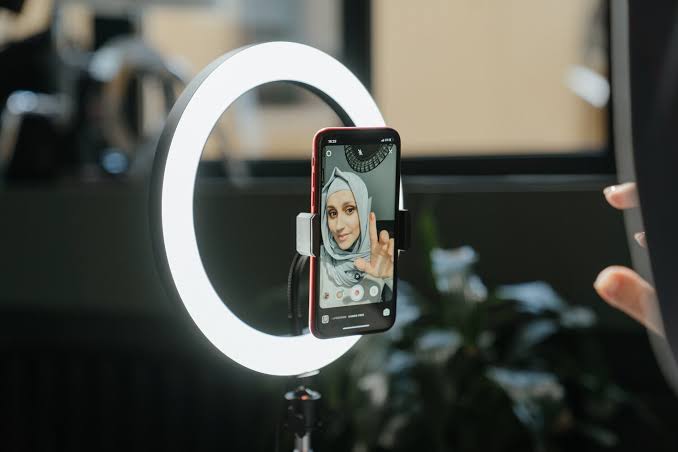
If you’ve been using your ring light the same way everyone else does, chances are you’re not getting the most flattering results. Ring lights are everywhere now, from home offices to content studios, but convenience doesn’t always equal good lighting.
I am Chibuzor Abraham, a ring light repairer based in Enugu, Nigeria, and my goal is to help you see light differently. Once you understand how light shapes your face, you can make educated choices that elevate your photos and videos instantly.
Let’s break it down.
Why Ring Lights Are So Popular
Ring lights dominate home photography and video for two main reasons.
1. They’re Naturally Flattering
A ring light produces soft, diffused light that hits the face head-on. Because it wraps around the subject in a circular shape, it minimizes harsh shadows and helps smooth skin texture. In photography, this is often called beauty light for a reason, it flatters almost everyone.
2. They’re Convenient
Modern ring lights are designed for speed and simplicity. With phone mounts built directly into the center, you can set up, hit record, and go. No extra gear, no complicated positioning , just plug it in and you’re lit.
But that convenience comes at a cost.
The Problem with the Standard Ring Light Setup
Most people use a ring light exactly the same way:
- Phone in the center
- Light directly at face level
- Camera and light locked together
This setup works, but it also boxes you in creatively. Lighting isn’t just about being bright, it’s about shaping mood, directing attention, and highlighting what you want the viewer to notice.
When product design dictates your lighting choices, you lose control over the final image.
How to Analyze Light Like a Photographer
Before changing anything, you need to learn how to read light. There are three things to look for in any image:
- The brightest areas (where the viewer’s eye goes first)
- Highlights (where light reflects off the skin)
- Shadows (where shape and dimension are created)
In a standard ring light setup, the brightest areas usually appear:
- On the forehead
- Across the cheeks
- On the chin
- Often on the neck
Shadows tend to fall around the edges of the face, and because of the hole in the center of the ring, there’s often a noticeable shadow running down the middle of the nose.
Visually, the light shapes your face… like a ring.
Why Flat, Centered Light Can Be Unflattering
That central shadow on the nose is a big giveaway. If you’re familiar with makeup, this might feel counterintuitive. When contouring, we don’t darken the center of the nose, we contour the sides and highlight the bridge.
Lighting works the same way.
Flat ring light placement removes dimension, flattens facial features, and draws unnecessary attention to areas like the neck rather than the eyes.
The Simple Adjustment That Changes Everything
The first step: separate the phone from the ring light.
Once your camera and light are independent, you regain control.
Try This:
- Raise the ring light slightly above eye level
- Tilt it downward toward your face
Immediately, you’ll notice:
- The neck becomes less illuminated
- The brightest areas shift to the forehead and eyes
- Attention is pulled upward to the most expressive part of the face
You’re no longer lighting everything equally, you’re guiding the viewer.
Creating a More Sculpted, Expressive Look
With the adjusted light position, highlights now fall more intentionally:
- Along the bridge of the nose
- On the cheeks and brow
- Subtly on the chin and lips
Shadows begin to form naturally:
- Under the jawline (creating a chiseled look)
- Along the sides of the nose
- Gradually from light to shadow across the face
This controlled contrast adds depth, shape, and elegance, the same principles used in professional portrait photography.
How Light Directs the Viewer’s Eye
Lighting isn’t just about how you look, it’s about how the viewer moves through the image.
With proper placement:
- The eye is drawn first to your eyes
- Then outward across the face
- And gently back again
Instead of staring at a flat, evenly lit face, the viewer experiences dimension, emotion, and presence.
There Is No “Correct” Ring Light Setup
There’s no single right or wrong way to use light. What matters is intent.
Want to highlight your jawline?
Lower the light slightly.
Want brighter eyes and a slimmer neck appearance?
Raise it and angle it down.
Once you understand how light shapes your face, you’re no longer guessing, you’re choosing.
That’s the real power of lighting: control, confidence, and self-expression.
Final Takeaway
A ring light isn’t just a tool, it’s a sculpting instrument. When you stop using it the way it was marketed and start using it intentionally, your photos and videos instantly feel more professional, expressive, and flattering.